Back to start page              
Innovation. Experience. Performance.     Return to Chart's Home Page    
About Us Bulk Packaged Gas Systems / LNG Contact Us


Products
Downloads
What is LNG?
LNG Satellite Plants
LNG White Paper

Visit our Spare Parts Online Shop


Chart Industries LNG Technology Brings Clean Energy To End Users

Introduction
No Pipeline? No Problem
Medium Size LNG Technology Value Chain
Liquefaction Technology
Liquefier Storage Systems
Transport of LNG
Satellite Stations
Re-Fueling Stations
Vehicle Onboard LNG Systems


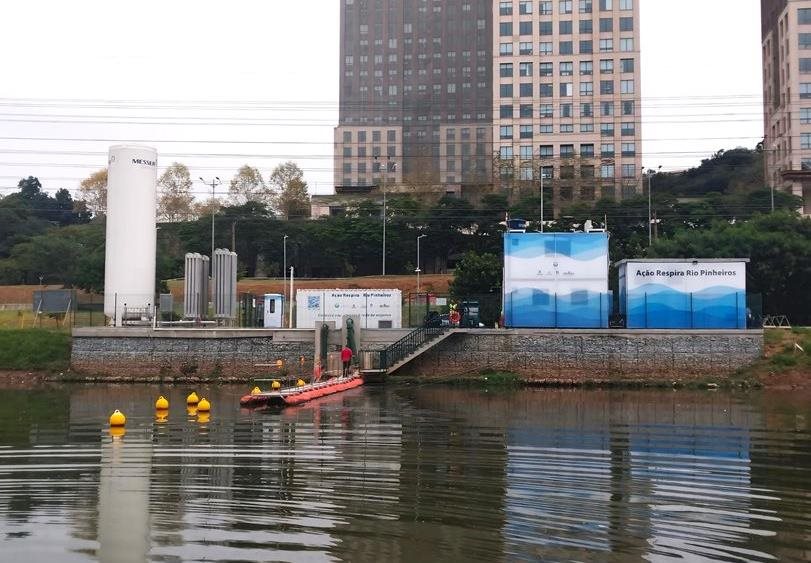
LNG Satellite Station. Turn-Key delivered to Naturgass Vest, Norway, with storage capacity of 1 500 000 liters and delivery of 4 200 Nm3/hour, serving an aluminum foundry. NGV is a LNG whole-saler. The gas is delivered by NGV’s ship which can be seen in the background. The ownership to this installation, located at Sunndalsøra, has since been transferred to Naturgass Møre AS.

Introduction
Natural gas is becoming one of the most important primary energy sources for the 21st century. This is due to the large reserves throughout the world and because it is a relatively clean fuel. Natural gas produces about half of the carbon dioxide compared to other fossil fuels, with very few undesirable emis-sions. Natural gas is the clean fuel of choice as it helps solve two major environmental concerns: air pollution and the greenhouse effect.

An important issue of natural gas technology is that gas resources are located in isolated parts of the world, often far from concentrated energy consumption. In order to transport the gas, long distance pipelines or other means of transport, such as large ocean tankers, are required.

Large natural gas liquefiers and LNG tankers have been in service for decades. There is widespread consensus among industry experts that the global Liquefied Natural Gas (LNG) trade is primed to develop exponentially over the next ten years. Worldwide production of LNG is expected to double within next six years. However, at the present time, most of the LNG is being converted to gas and compressed into long distance pipelines.

[back to top]

No Pipeline? No Problem
A new trend in the industry is utilizing a medium size LNG system, also called the “virtual pipeline”, which delivers LNG directly to customer sites. These systems are independent of pipe-lines and therefore, offer improved access to the benefits of natural gas, reaching a larger number of companies, applications and end users. European nations with rich resources of natural gas, such as Norway or Poland, or coun-tries importing large quantities of LNG, such as Spain, Turkey or Portugal, have instituted strategies to encourage the formation of infrastructure needed for distribution. Traditional underground pipelines are too expensive for gasifica-tion of low populated regions or areas with rich existing underground infrastructure. Also, the required lead-time of building such pipelines is several years, which is not sufficient for the growing demand resulting from substitution of oil in certain regions. Liquefaction of natural gas and distributing as liquid to various points of use is a viable solution. The LNG Value Chain is an expression of the turnkey processes, which enable the end use of LNG.

[back to top]

Medium Size LNG Technology Value Chain

Source of LNG for distribution is the most important component. A portion of LNG can be sold from on-shore re-ceiving terminals, while the major portions are converted to gas and transported via pipelines. However, in some cases there are reasons, to build local liquefiers.
Liquefier storage tanks ensure reten-tion capacity for distribution.
Transport vessels and vehicles serve delivery logistics systems.
Satellite stations built at the gas user site or at local distribution centers.
Vaporization systems are the majority portion of the satellite station. They convert liquefied gas back into the gase-ous phase to serve process technologies and heating systems.
Vehicle refueling stations are a special kind of satellite station which provides refueling of vehicles operating on compressed natural gas (CNG) or on liquefied natural gas (LNG) directly onboard.
Vehicle onboard LNG systems ensure storage and vaporization of LNG for delivery of pressurized gas to the vehicle engine.

[back to top]

Chart-Industries Inc. provides products and services which span the entire LNG Technology Chain.
Chart-Industries and their associated companies, known before under their trademarks PSI, CVI, PEI, MVE, Altec, Cryenco have been pioneering LNG technology for two decades. Satellite plants, road semi-trailers, rail cars, locomotives, LNG barges and LNG vehi-cle fleets have been routinely operated in USA. Other LNG systems were delivered to South Asia, Far East and Australia. From the year 2000, the same process was started in Europe, using both the Chart products from USA and the European resources of a Chart (1997) acquisition, Chart Ferox a.s., a company with 60-year tradition of cryogenic technology. Currently, their LNG systems are in operation in the UK, Spain, Norway, Poland and Turkey.

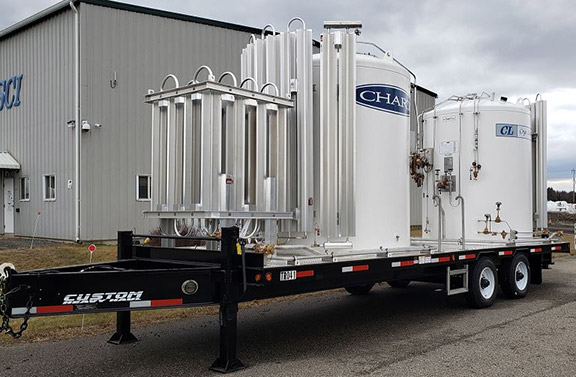
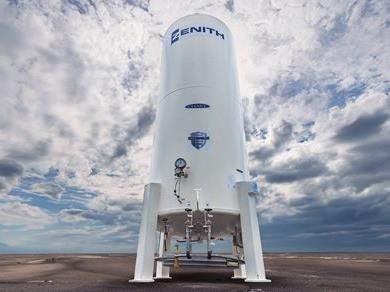
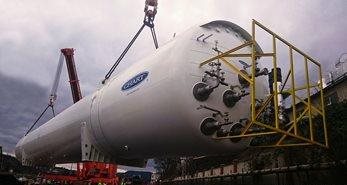
Photo: Storage tank containing 257.000 liters of LNG with a pump system for filling road trailers, located at a Gasnor LNG liquefac-tion plant in Snurrevarden, Norway.

[back to top]

Liquefaction Technology
The process of liquefaction is based on cooling the gas to its condensation temperature –162°C, which is in the range of “cryogenic” temperatures and requires very special, highly technical designs. By transferring gas to a liquid state, this process reduces its volume nearly 600 times for simplified storage and transportation.

Large quantities of LNG are available at continent shore receiving terminals with capacities of tens of millions of liters and distribution systems are in operation from several technicians. It is relatively easy and low cost to transport LNG over the road for distances of 500 km, e.g.

In some cases, local liquefaction has been preferred, especially:
• If local wells of gas, distant from industry and cities become commercialized.
• If the gas wells contain a larger concentration of nitrogen, which is inert, reduces the energy value of the gas and can only be rejected by gas liquefaction.
• If smaller settlements in low populated areas should be gasified and building pipelines is not economical, gas can be liquefied at transit pipelines for off-pipeline distribution.
• If pressure reduction stations between high pressure and low pressure pipelines systems offer an opportunity to liquefy gas without energy consumption.
• If the gas can be liquefied, without energy consumption, at nitrogen vaporization stations.

[back to top]

Liquefier Storage Systems
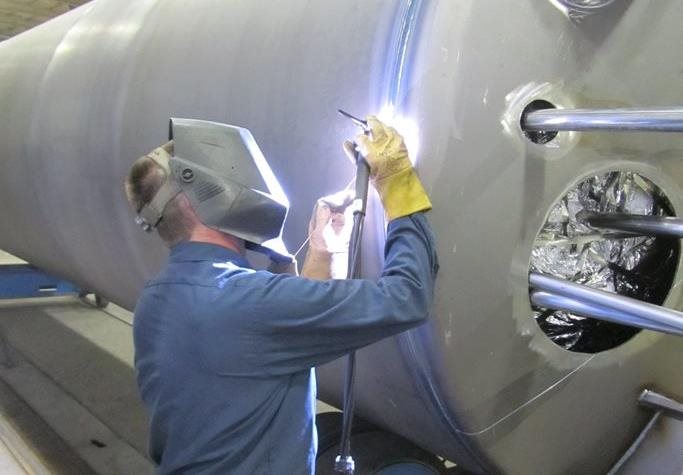
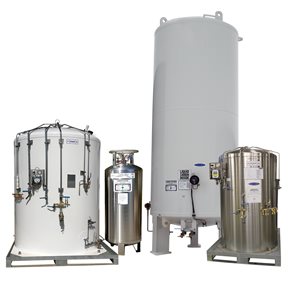
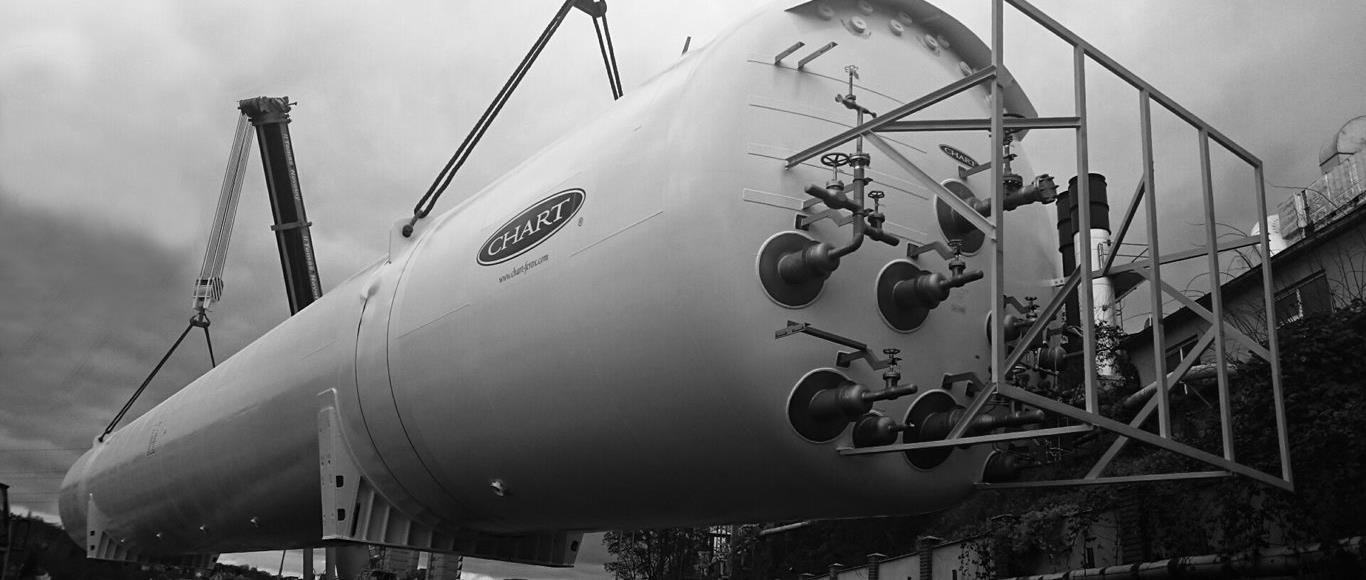
These components consist of one or more tanks. Because of LNG’s low temperature, they are built as double shell vessels with highly effective powder-vacuum or multi-layer-vacuum insulation, which ensures long time storage with limited vaporization. Their volume is determined typically for one to two weeks’ liquefier capacity.

[back to top]

Transport of LNG
With Chart, the transport of LNG is reliable and safe. In fact, safer than petrol because of LNG’s low tempera-ture, high ignition temperature and narrow range of ignition concentrations.

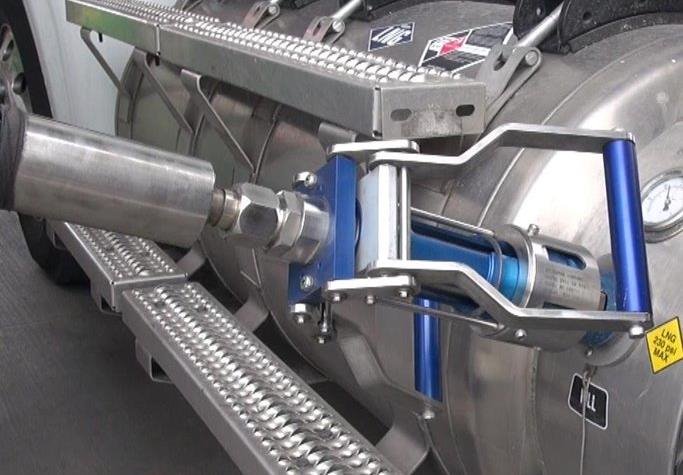
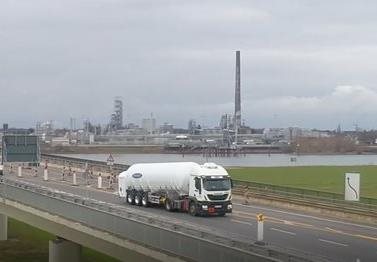
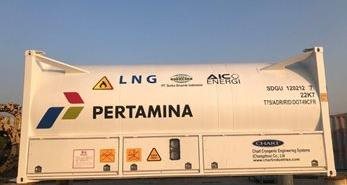
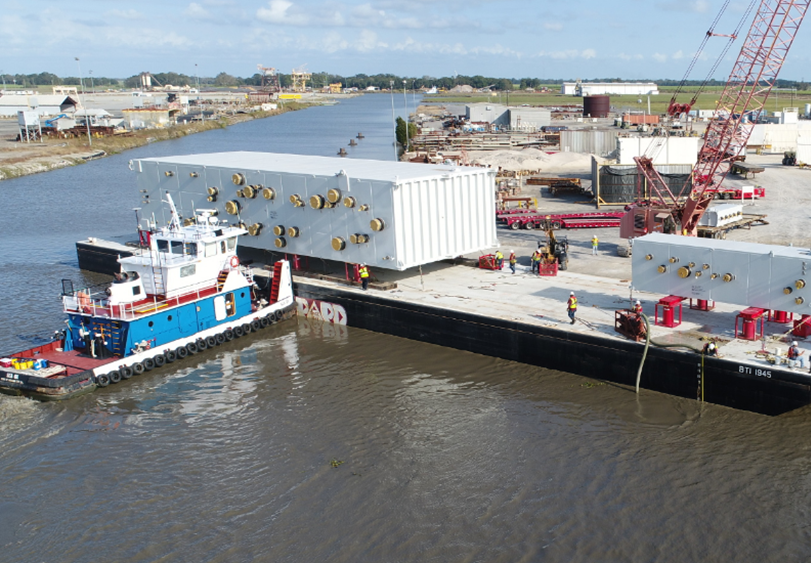
With pumps and hoses, LNG can be transferred into road trailers, barges and rail cars, or into Intermodal ISO con-tainers for long time – long distance transport as low-pressure – low tem-perature liquid.

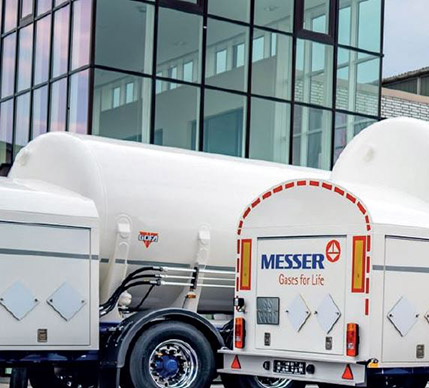
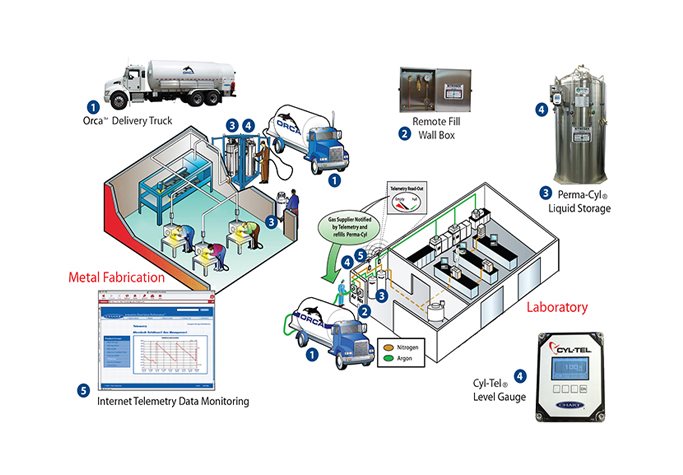
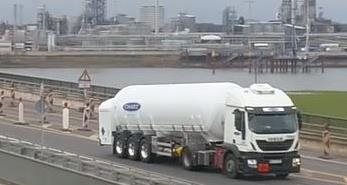
Sophisticated designs of the transport vessels ensure effective thermal insulation as well as passive safety, as it is required by the Danger Goods Road Transport Regulations (ADR), RID, IMO, DOT and other specific norms. The size of transport vessel varies from rigid truck mounting Orca™ for 12500 liters, ISO containers for up to 20000 liters and semi-trailers for up to 56000 liters gross capacity.

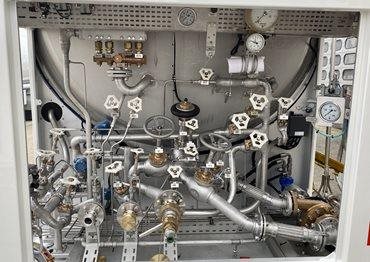
Photo: Cold-box component of a LNG liquefier.

Satellite Stations
These stations are built at the gas end user or as source for local pipeline network from the storage tank. Storage Tanks are sized for a reasonable retention time of three to fourteen days, depending on consumption capacity.

Operation of satellite vaporizing stations range from manual, to fully automated, with no personnel and with possibility to be monitored and controlled by telemetry systems from commercial offices located hundreds of kilometers away. On-site automation systems ensure proper gas pressure in the downstream pipelines without external energy consumption. This is accomplished by using the heat of ambient air or burning 2% of the gas flow rate in gas-heated vaporizers.

Emergency shut down systems ensure total safety of these plants should there be any unexpected external fire or gas leak. The use of stainless steel as a main construction material along with state of the art manufacturing and construction technology, and rigorous inspection of design and products by state authorities provide the best guarantee of the plants reliability and safe operation. A distinct advantage of LNG satellite stations is the flexibility of the flow control rate in the range of 0 to 100% with potential for several hours overload.

[back to top]


Municipal LNG gasification satellite station technology, storage capacity 60 000 li-ters, delivered to KRI, Poland

There are several kinds of satellite station applications:

Direct heating and process technology systems ensure continuous gas delivery according to consumption rates with possible seasonal or daily diagram variations. High reliability and several years’ uninterrupted operation are typical requirements. Small plants GreenBox, with a capacity of 21000 liters, can be delivered in containers for easy to install, easy to move designs.

Back-up systems are incorporated at sensitive process technologies like glass factories, which normally oper-ate on pipelines, but a back up system is needed for any potential pipeline interruption. Storage capacity is sized for coverage of limited time operation needed for failure rectification or for safe shutdown of the plant without damage to equipment or product.

Peak shaving systems are designed to compensate for deficiencies in gas delivery, when gas delivery by pipeline cannot cover consumption due to limited gas supply, often related to source capacity or pipeline sizing. Typically they are used for additional heating during several very cold winter days.

[back to top]


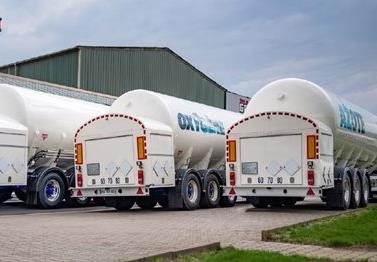
LNG semi-trailer with a capacity of 56 000 liters from a series, delivered to Naturgass Vest, Norway.

Re-Fueling Stations
LNG stations serve vehicle fleets, operating directly on LNG onboard. Heavy-duty trucks, busses, refuse vehicles and frequently operated fleet vehicles such as taxis are typical vehicles with great potential for LNG fueling. Compared to much more traditional CNG systems, LNG enables lower vehicle dead weight and longer runs because of its high density and low pressure. Centrifugal pumps ensure delivery of LNG into vehicles with the same speed, as high performance petrol pumps.

LCNG stations can use LNG to support the operation of existing CNG vehicles. High-pressure piston pumps deliver LNG into atmospheric vaporizers and buffers so that CNG vehicles can be refueled quickly.

LNG/LCNG stations are mostly combined for fueling both versions of vehicles.
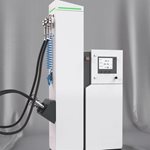
Design of the vehicle refueling station starts from vessel integrated systems, for the smallest pilot plants for several vehicles, over containerized Gas Box or Black Box. Easy to install, easy to move variants, up to large stations with several storage tanks and multiple CNG and LNG dispensers for large fleets and public refueling. The above mentioned vessel truck, Orca, can be used as a mobile re-fueling station.

Underground tanks are a typical option for urban areas to conserve real estate requirements and to meet architectural regulations.

Both the LNG and LCNG Chart stations are well customized for easy and self-service operation and card-pay systems.

[back to top]


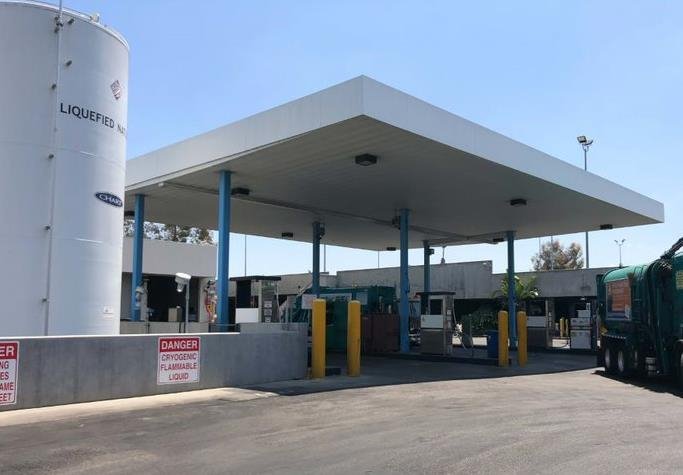
World’s largest LNG/LCNG station built by Chart-NexGen in California. 4×60.000 liters storage capacity, 6 LNG dispensers and 3 LCNG dispensers. Serving 200 refuse vehicles.

Vehicle Onboard LNG Systems
These systems consist of one or more fuel tanks, super-insulated, which ensures long time on board storage and loss-free operation. LNG is being vaporized during engine operation in a vaporizer heated by the engines cooling system. A pressure regulator controls delivery of gas to the vehicle’s engine and maintains a constant pressure. 5000 LNG vehicles with Chart systems operate in USA and 250 in Europe (UK, Spain). LNG technology, thanks to its effectiveness, stimulates further progress of natural gas vehicles (NGV’s), for cleaner cities and lower-cost fueling.

LNG Applications for Vehicle Fueling solves the existing deficiency of the CNG vehicle system – binding refueling stations to pipelines. LNG and LCNG stations make it possible to build a continuous network of re-fueling stations in regular distances, at accessible places directly on motorways. This would stimulate wide use of natural gas for the transport sector and it would help to achieve the European Union target to substitute 10% of vehicle consumption by natural gas till the year 2020. This represents additional 47.000.000.000 m³ of gas per year.

[back to top]


       Copyright 2005 Chart Industries

Home        Site Map